Crosswords With Friends
- 3.7
- Rating
- 1.00M
- Installs
- Free
- Price
 Analysis by App-foxy
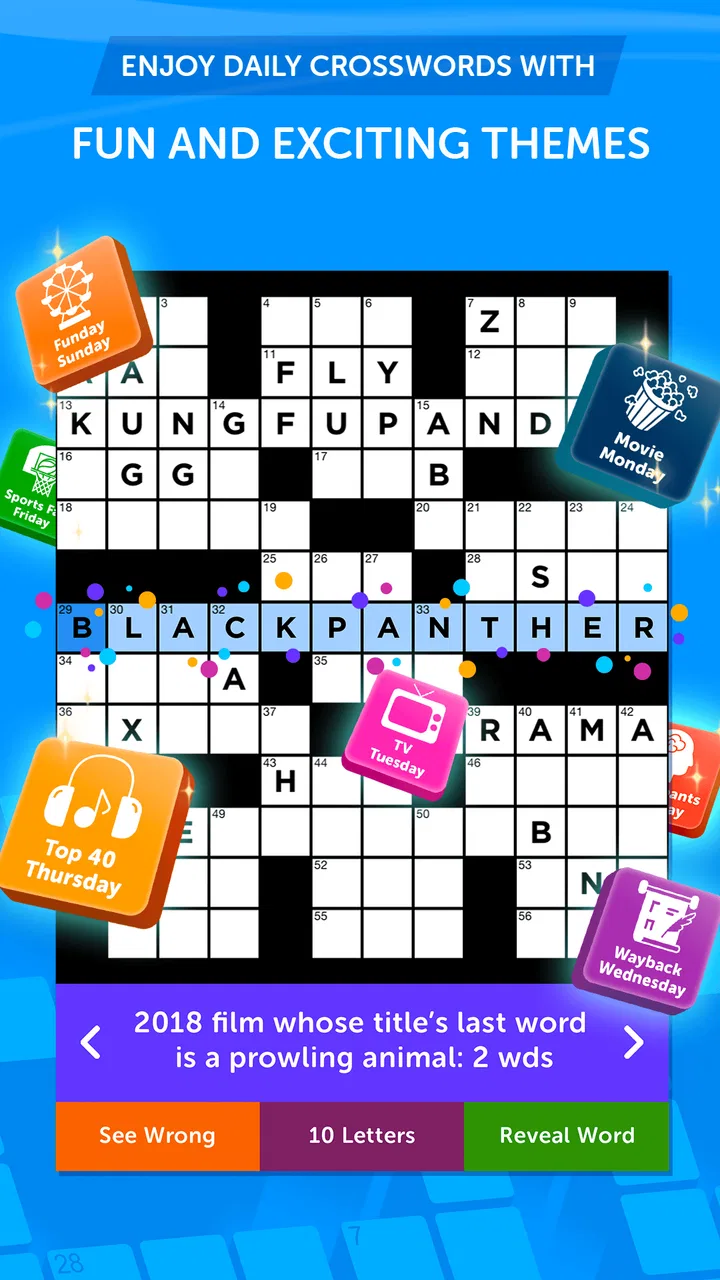
I approached Crosswords With Friends as a quick, modern word game rather than a traditional newspaper puzzle, and that distinction matters. It is a free crossword game from Zynga, built for people who want a familiar vocabulary challenge in a format that fits short breaks. The central appeal is easy to understand: open the game, work through clues, and return whenever you have enough attention for another round.
That sounds simple, but a good crossword app lives or dies by how well it handles the moments around solving. Can I make progress without committing to a long session? Does the interface help when I am stuck rather than turning every mistake into frustration? Is the free experience useful on its own, or does it mainly push toward purchases? After spending time with it, I see a game with a clear everyday purpose, a friendly entry point, and some limitations that serious crossword fans should consider before settling on it.
How the free model affects the experience
The most important cost detail is straightforward: the game is free to download and play. That makes it easy to try without deciding in advance whether a crossword subscription or paid puzzle collection is worth the money. For someone who only wants an occasional word challenge, that low commitment is a genuine advantage.
You May Also Like

 Blood Strike: 2.5 Anniversary
Blood Strike’s Loadouts Turn Every Drop Into a Tactical Gamble
A close look at Blood Strike’s custom loadouts: how fast access to signature weapons reshapes its battle royale rhythm, rewards preparation, and narrows the gap between fights.

 Pandora - Music & Podcasts
Pandora’s Music Is Easy to Start, but Harder to Recover
Pandora’s strength is its low-effort path from a seed to a station. Its weak spot is how much confidence it asks you to place in connection, setup, and quiet recovery.

 8 Ball Pool
 Is Built on Rivalries, Rematches, and Routine
A close look at the rivalries, rematches, shared routines, and unanswered safety questions that turn a quick pool match into a persistent mobile community.

 Samsung Music
’s Quiet Strength Is Playing What You Already Own
Its reach comes less from spectacle than from dependable access to a personal library. That simplicity is both the app’s strongest retention engine and its ceiling.

 AccuWeather: Weather Radar
AccuWeather Review: A Quick, Clear Forecast for Everyday Decisions
For everyday plans, the best forecast is the one you can understand quickly. AccuWeather makes rain timing, radar, and local conditions easy to act on, with a few trade-offs.

 Hill Climb Racing
Why Hill Climb Racing Still Turns Crashes Into One More Run
A tiny car, a bumpy hill and one more upgrade: Hill Climb Racing keeps resurfacing because its simple chaos makes every near-miss feel personal.
More From Our News Desk



There are in-app purchases ranging from $0.99 to $59.99 per item. I would therefore treat the free version as the starting point, not assume that every convenience or optional purchase has the same value for every player. The wide range means a small, occasional purchase and a much larger one belong to very different spending decisions. If you are comfortable playing within the free offering, there is no need to treat the game as a paid purchase simply to begin.
That distinction also changes how I judge it against conventional alternatives. A printed crossword book asks for money before you solve anything, while a newspaper-style digital subscription may bundle puzzles with other content. Here, the initial barrier is lower, but the trade-off is that optional spending can become part of the experience. I recommend deciding your personal limit before playing regularly, especially if you tend to buy hints or convenience items when a clue becomes stubborn.
The game is rated for Everyone, which fits its broad, approachable presentation. That does not mean every clue will be easy; word knowledge varies enormously between players. It does mean the title is positioned as a general-audience word game rather than a narrowly specialized or mature experience. Families and casual players can consider it, while still remembering that difficulty comes from vocabulary and clue style rather than from age-restricted content.
Its current version is 51.34.3076, and it runs on Android 7.0 or later. In practical terms, that gives people with older compatible Android devices a chance to try it without needing a recent phone. I would still keep the app updated when possible, since puzzle games depend on a stable interface and reliable access to their current content.
What you receive before spending
The free entry point delivers the core reason to install the game: a repeatable crossword activity that can occupy a few spare minutes or a longer quiet session. I like that this makes the decision less risky than buying a large puzzle collection based only on a description. You can discover whether the clue tone suits you, whether the layout feels comfortable, and whether the pace matches your habits before paying anything.
That trial period is especially useful because crossword preferences are personal. Some players want dense, traditional clues with a slow, satisfying solve. Others prefer a lighter routine that can be picked up between errands. I found this game more appealing for the second group. It works best when I regard each puzzle as a small mental reset rather than a formal test of expertise.
There is also value in the social framing suggested by its name and presentation. A game built around “friends” feels less solitary than a crossword book, even when I am solving independently. That can make it easier to build a shared habit with someone who enjoys wordplay but does not want a full board game or a lengthy competitive app. I would not choose it solely for social interaction, though; the crossword itself has to be enough to keep you returning.
One useful habit is to separate solving from spending. I first fill every answer I can justify, then revisit crossings, and only after that consider whether I actually need help. This prevents a difficult clue from immediately turning into a purchase decision. It also improves the puzzle experience because the most satisfying breakthroughs often come from seeing how several partial answers support one another.
Where it fits among crossword alternatives
Compared with a paper crossword book, this game is more convenient and less permanent. I can carry it without a pen, erase mistakes cleanly, and use a spare moment without preparing anything. The downside is that a physical book gives me a clear sense of ownership and often feels calmer, with no digital distractions around the puzzle. If you enjoy writing answers by hand or keeping completed pages, paper remains the better choice.
Compared with a dedicated premium crossword app, the free model is the main difference. A paid alternative may feel more predictable if its cost clearly covers a defined library or a regular puzzle package. This title is easier to sample, but players who dislike optional purchases or any feeling of monetized friction may prefer paying once for a focused crossword product instead.
Compared with general word games, the crossword format rewards connected reasoning rather than isolated vocabulary recall. A single answer can unlock several neighboring spaces, so patience and pattern recognition matter as much as knowing obscure words. That makes it more rewarding than a simple word scramble for me, but also less instantly accessible when I am tired and want a purely reflexive game.
The best alternative depends on the kind of attention you want to give. Choose this one when you want a familiar grid-based challenge with a low-cost entry. Choose a paper book for a distraction-free ritual, a premium crossword service for clearer paid value, or a faster word game when you want immediate progress without wrestling with intersecting clues.
How I used it in ordinary situations
My most natural use case was the short waiting period: sitting down with coffee, waiting for an appointment, or taking a break after finishing a task. I could begin by scanning the clues I recognized, enter the obvious answers, and let the crossings guide the harder ones. That workflow feels more productive than scrolling aimlessly, but it does not demand the concentration of a full-length game.
A second use case is a shared daily routine. Two people can compare which clues slowed them down, exchange guesses, and use the puzzle as a conversation starter. The important point is that the game does not need to replace a social activity; it can simply give friends or family a small recurring topic. If the other person does not enjoy crosswords, however, the “friends” angle will not create interest by itself.
I also found it useful as a vocabulary workout, with a qualification: solving clues is not the same as systematically learning a language. The game can expose me to unfamiliar words and prompt me to look up meanings later, but anyone seeking structured language study should use an educational app designed for definitions, pronunciation, and spaced practice. Here, learning is a side benefit of solving, not the main system.
Practical solving habits that make it less frustrating
Start with clues that have a clear answer rather than moving through the grid in strict order. Filling a few reliable entries gives you letter patterns that make ambiguous clues easier. I avoid forcing an answer just because it technically fits; an incorrect early guess can distort an entire section and make the puzzle seem harder than it is.
When I reach a dead end, I switch areas instead of repeatedly staring at the same clue. Crosswords often reward a change of focus. A different corner may provide the missing letter that turns an uncertain answer into an obvious one. This is a small but important trade-off: the game is more enjoyable when I treat being stuck as a signal to change strategy, not as a reason to spend immediately.
Another useful approach is to keep track of confidence. I mentally mark answers as certain, likely, or speculative. When crossings disagree with a speculative word, I remove it first. This prevents the common mistake of defending a favorite guess simply because it was entered early. It also makes any optional help more meaningful, because I know exactly which part of the puzzle is causing the problem.
Short sessions work better for me than trying to finish everything in one sitting. Returning later gives the clues some mental space, and a fresh look can reveal a word that felt invisible earlier. Players who want uninterrupted, high-intensity solving may find this stop-and-start rhythm less satisfying, but casual users can turn it into a comfortable habit.
Where the experience can lose momentum
The free model is convenient, but it can make the value question more complicated than it first appears. A player who wants a completely uninterrupted crossword routine may become sensitive to any limit, prompt, or purchase option encountered during regular play. Because the optional items span from small amounts to a much larger purchase, I would not spend automatically. First establish whether the free experience already gives you enough puzzles and flexibility to justify continued use.
There is also a difference between accessibility and depth. The game is easy to install and understand, but that does not guarantee that every clue will feel fresh or perfectly matched to your knowledge. Crossword enjoyment depends heavily on clue wording, cultural references, and the balance between approachable and obscure answers. If you prefer a very specific puzzle style, a specialist crossword source may offer a closer fit.
Another limitation is that digital convenience can weaken concentration. Notifications, other apps, and the temptation to switch tasks are always nearby on a phone. A paper crossword naturally creates a more focused environment. I recommend turning the session into a deliberate break rather than opening the game while multitasking; otherwise, the puzzle can feel more fragmented than relaxing.
Players who dislike hints, boosters, or any purchase-based assistance should decide early how they want to play. There is nothing wrong with using help, but the satisfaction of a crossword comes partly from working through uncertainty. My preference is to use assistance only after exhausting crossings and returning to the clue later. That preserves the challenge while avoiding the feeling that one difficult answer controls the entire session.
Who is most likely to get good value
I would recommend it to casual crossword fans who want a free way to test a mobile routine before committing money. It is also a sensible fit for people who enjoy word puzzles in short bursts, prefer typing to writing, and like having a game available during ordinary downtime. The Everyone rating and broad word-game format make it approachable for a wide audience, although individual clue difficulty will still vary.
It may suit someone trying to replace passive phone scrolling with a small mental challenge. The key is to use it intentionally: open it for one puzzle or one focused break, then stop when the session is over. That turns the game into a controlled habit rather than an endless source of distraction.
I would be more cautious recommending it to expert crossword solvers who already know exactly what puzzle construction and editorial style they want. They may prefer a paid specialist option with a more predictable catalog. I would also steer away from it if your main goal is formal vocabulary instruction, competitive word-speed play, or a completely offline paper-like experience.
For families, the game can work as a shared clue-solving activity, but expectations should be realistic. Younger players may know fewer references, while adults may find clues obvious that children cannot access yet. The Everyone label makes it broadly suitable, not uniformly easy. Solving together is likely to be more rewarding than handing the phone to a child and expecting the game to teach every answer.
My final decision on installing and paying
My verdict is to try it if you want a low-risk, mobile crossword habit. The free price makes experimentation sensible, and the game’s strongest quality is its ability to turn small gaps in the day into structured wordplay. I appreciate that I can begin without buying a puzzle book or subscribing to a broader service, then decide based on actual use rather than promises.
I would not describe it as the universal best choice for every crossword player. The purchase range means I would keep spending deliberate, and dedicated solvers may find better value in an option with a clearer premium structure. Players who want paper, deep specialization, or formal language learning should choose accordingly rather than expecting this game to cover all three needs.
After weighing those trade-offs, I see the strongest value in the free trial experience and in the everyday convenience. Install it when you want approachable crossword solving that fits around your schedule. Play it without rushing to buy help, use crossings as your main tool, and judge the optional spending only after you know how often you return. For me, the best reason to keep it is the practical, bite-sized crossword routine—not the promise of replacing every other word-puzzle format.
Zynga’s game has reached a substantial audience, with more than a million installs, and its average rating is 3.7 from roughly 37 thousand ratings, alongside about 13 thousand written reviews. Those figures suggest a recognizable but not universally loved experience, which matches my assessment: it is worth trying for the right player, but its value depends on whether the free format, clue style, and optional purchase approach fit your personal crossword habits.
FAQs for Crosswords With Friends
01What is Crosswords With Friends?
Crosswords With Friends is a mobile word puzzle game built around the familiar crossword format, with an emphasis on playing against friends or other opponents. It offers themed clues, a competitive turn-based experience, and a more social alternative to traditional solo crossword apps. The game is designed for casual sessions, so you can play at your own pace rather than solving an entire puzzle in one sitting.
02How does multiplayer work in Crosswords With Friends?
You can start a match with friends, challenge another player, or be paired with an opponent depending on the available game options. Players generally take turns filling in answers on the same crossword board, making the experience feel more like a friendly competition than a standard puzzle book. You will usually need an internet connection to send moves, receive turns, and keep matches synchronized.
03Is Crosswords With Friends free to download and play?
Crosswords With Friends can typically be downloaded without an upfront purchase, but the free experience may include advertisements, optional purchases, or premium features. Depending on the version and platform, some content or conveniences may be restricted unless you subscribe or pay. Before downloading, check the current store listing for details about in-app purchases, subscriptions, advertising, and any trial terms.
04Does the game require an internet connection?
An internet connection is generally needed for the main multiplayer features because the app must exchange turns, update match progress, and connect you with other players. Some crossword content may load or remain accessible temporarily, but offline availability can vary by version and device. If you expect to play while traveling, open the app beforehand and confirm which puzzles or features remain available without a connection.
05Is Crosswords With Friends suitable for beginners?
Yes, the game is approachable for people who enjoy word puzzles but may not be experienced crossword solvers. Clues can range from straightforward vocabulary to pop culture, current topics, and more challenging wordplay, so difficulty may vary from puzzle to puzzle. Beginners can learn by playing at their own pace, using available hints when necessary, and reviewing unfamiliar answers after each match.
Pros
- Daily puzzles offer a reliable
- bite-sized vocabulary challenge.
- Clues cover varied topics
- keeping rounds from feeling repetitive.
- Competitive scoring adds motivation for players who enjoy friendly rivalry.
- The interface is simple to learn
- even for casual crossword players.
- Helpful hints can make difficult clues less frustrating.
Cons
- Some features and hint options may be limited without in-app purchases.
- Advertising can interrupt the experience between puzzles.
- Difficulty may feel inconsistent from one puzzle to the next.
- Players wanting completely offline access may find connectivity limiting.
- The social features are less useful if friends do not also play.

Crosswords With Friends
Gallery